
Feracious fires aflame within the nation, sinister, thus tempting whispers of the devil orchestrate impending doom and the worst of all a disease worse than others, more seducing, corrupting, and infuriating a perplexing contradiction in thought, belief, and values: which calls the people of Spain for a particular cause derived from again a thought yet more provoking, something that has a potency to gather, influence, and force people to fight and turn them into soldiers, something that is crucial when struggling and working for your family and beloved ones, something that can change, lead and destroy one: love. Which can either be; the LOVE FOR THE NATION, or the LOVE FOR THE PEOPLE.
JCC

CC
Blades of Sparta committee is a blood-stained, relentless crisis committee set during the Peloponnesian Wars, focusing largely on the military affairs of Sparta and its surroundings, where the sharpness of your pen will become the sharpness of your blade; amid the clash of shields, the whistle of arrows, the strike of spears, and the roar of battle cries, you will stand as the fearless sons of Sparta, its kings, generals, and high-ranking commanders who know neither fatigue nor hesitation, shaping the course of history in an arena where you must not sheathe your sword even for a single moment, where parchment and ink will not resolve disputes and the cold edge of steel will serve as the only remedy

In this chamber, you are tasked with the monumental experiment of proving that the “Greater East Asia Co-Prosperity Sphere” was not a blueprint for liberation, but a ledger of systemic plunder and unprecedented atrocity. As an assembly tasked with litigating the vast, fractured geography of the Pacific Theater, the IMTFE represents a distinct historical friction: the moment where the architects of the Imperial Way are asked to trade their katanas for a seat in a room where the rules of engagement are being rewritten in real time.
IMTFE

By the late 2030s, the language of global politics had shifted from prevention to adaptation. Heatwaves once described as statistical anomalies became seasonal expectations. Satellite imagery showed reservoir lines shrinking year after year.
Agricultural ministries quietly revised food security projections downward while financial markets attempted to absorb the shock through speculation on water futures and synthetic crop technologies.
On September 14, 2043, international leaders convened in emergency session under frameworks once coordinated by the United Nations to address escalating freshwater disputes. The summit concluded with pledges of cooperation and desalination investment. Within eighteen months, armed patrols surrounded multiple transboundary dams.
Water infrastructure was reclassified as “strategic military assets.”
On November 19, 2054, a limited nuclear exchange occurred between two regional powers. Official statements described it as “contained.” Financial markets did not recover. Deterrence theory, long treated as stable doctrine, entered a phase of quiet doubt.
Meanwhile, something else was accelerating.
By 2057, autonomous logistics systems were managing nearly half of global food redistribution. AI-driven predictive governance models were adopted by multiple governments under emergency authority. Defense ministries integrated autonomous targeting support into command structures, citing human decision latency as a strategic vulnerability.
The integration was framed as temporary.
WORLD SENATE

The National Security Council (NSC) is the President’s principal forum for considering national security and foreign policy matters with his senior national security advisors and cabinet officials. The Council also serves as the President’s principal arm for coordinating these policies among various government agencies. The assessment of military options, the coordination of intelligence, the activation of diplomatic channels, and the coordination of internal security measures are carried out within this structure. The significance of the September 11 attacks required rapid interagency coordination and strategic resolve in this emergency council, as well as the creation of an intervention plan capable of preventing further attacks.
NSC

WORLD BANK GROUP
The World Bank Group works to promote fair competition and sustainable economic growth across its member countries through providing loans, grants, and giving policy advice to reduce poverty and promote economic growth. It works to strengthen institutions, improve market systems, encourage private sector and prevent unfair practices to build stable and competitive economies.

During mid 20th century, a racial discrimination system was instutionalized in South Africa. With the arrival of Nationalist Party, policy got extended and got the name of Apartheid.For decades this system restricted the political, economic and fundamental access to human rights of non-white majority. Even though Apartheid was terminated in early 1990s, with the settled socio-economical disparities in the structure it continues to impact people even to this date.
UNGA
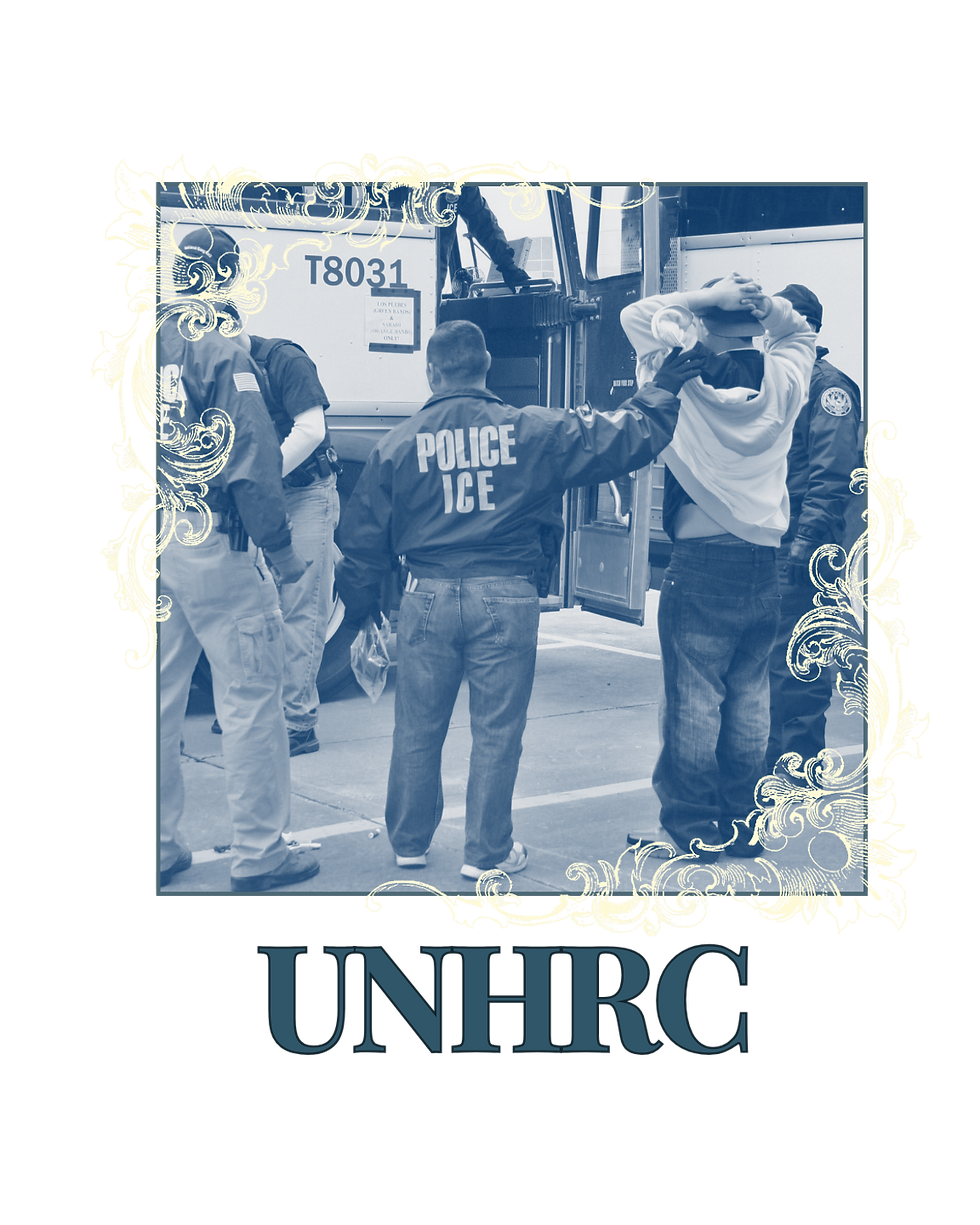
The United Nations Human Rights Council (UNHRC) is a UN body made up of 47 member states, tasked with promoting and protecting human rights worldwide. The Council is the main platform for dialogue on human rights issues and works to address violations and recommend solutions. It was created in 2006 to replace the Commission on Human Rights. The UNHRC has the authority to examine human rights situations, issue reports, and make recommendations. Periodically, the council reviews the human rights records of UN member states to identify areas for improvement.
UNHRC

WHO
Founded in 1948, World Health Organization (WHO) is the United Nations agency that connects nations, partners and people to promote health, keep the world safe and serve the vulnerable. WHO plays an essential role supporting countries to prepare for, detect, respond to and recover from health emergencies, including pandemics, disease outbreaks, natural disasters and humanitarian crises.
Conflicts consistently disrupt healthcare systems such as distribution of medical equipments, allocation of personnels and doctors. In post conflict zones its is considerably more challenging to recover from these impacts. Recognizing the vulnerable populations including children, women, immigrants, displaced individuals that experience further disadvantages while accessing healthcare in post conflict zones, it is essential to provide equitable assistance.

The United Nations Commission on Science and Technology for Development (UNCSTD) is the United Nations body for discussions on science and technology, its impacts, and how it affects development and sustainable future for all.
Emerging in the 2000s and becoming widely used in the 2010s, Artificial Intelligence now plays a significant role in human life. Artificial Intelligence has an indispensable place in people’s lives in many areas such as health, finance, education, manufacturing, and art.